Portlaoise GAA Club History
Our Story
From a public meeting in the Town Hall in 1887 to All-Ireland glory, modern One Club growth and a new era of development at Rathleague, this is the story of The Town.
Founded in 1887
The beginning of The Town
Portlaoise GAA Club was founded in the earliest years of the Gaelic Athletic Association, when the new movement was beginning to take root across Ireland. The inaugural meeting took place in the Town Hall at Market Square on Monday 28 November 1887. Portlaoise was then known as Maryborough, and the county as Queen’s County, but the idea that took hold that night would become one of the defining forces in the sporting and community life of the town.
The first chairman of the new club was Dr Thomas Francis O’Higgins, the county coroner, who was nominated by Patrick A. Meehan, a leading local businessman and later Nationalist MP. R.P. Fennell, who would become the first Catholic postmaster in the town in 1895, was elected first secretary, while John Moore, a respected publican at Market Square, became first treasurer.
The club was originally called the William O’Brien Branch, reflecting the nationalist atmosphere of the time and the connection between Gaelic games, local pride and national identity. The new club was one of thirteen represented at the reconvened first Laois Convention in the Town Hall on 1 January 1888, where P.A. Meehan was elected first county chairman.
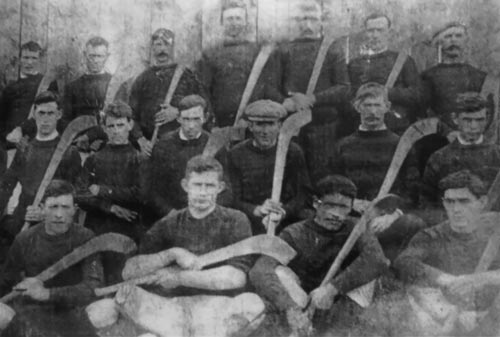
From the beginning, The Town promoted both football and hurling. That dual tradition has remained one of the club’s defining characteristics, making Portlaoise one of the oldest and strongest dual clubs in the Association. The club’s story has always been built around more than teams alone. It is a history of players, officers, mentors, families, schools, clergy, supporters and volunteers all shaping the same shared identity.
Early foundations
Maryborough, Fr Kearney and the first great chapter
Portlaoise established itself quickly. Within two years of foundation, the club had won a county football title and carried Laois to one of the most extraordinary early achievements in the history of the GAA.
Leinster title and All-Ireland final
In 1889, Maryborough won the county football title and represented Laois in the All-Ireland championship. The team, led by John Delany of Main Street, won the Leinster semi-final and final on the same day in Inchicore, defeating Bray Emmets and Newtown Blues. The side then qualified for the All-Ireland final, an early feat that remains one of the club’s most remarkable achievements.
Fr J.J. Kearney
Fr J.J. Kearney was one of the most important figures in the history of Portlaoise and Laois GAA. A curate in the town, club chairman and county chairman, he helped popularise both hurling and football. His leadership helped Laois become an All-Ireland hurling force, culminating in the county’s 1915 senior hurling title.
A field becomes a county ground
Fr Kearney acquired a playing field where O’Moore Park now stands. It was made available to the Portlaoise club and later developed into a county ground. It was a major gain for Laois GAA, though it also meant Portlaoise spent much of the following decades without its own permanent club base.
Through the years
Milestones in The Town story
The foundation meeting in the Town Hall
The inaugural meeting of Portlaoise GAA Club took place in the Town Hall on Monday 28 November 1887. It was a public meeting called by placard and attracted a large attendance from across Maryborough, now Portlaoise. Among those present were Dr Higgins, coroner for Queen’s County, who presided, along with N. Walsh T.C., P.A. Meehan T.C., C. McDermott T.C., P. Kelly T.C., T. Lawlor T.C., C.E. Corcoran, solicitor, Mark Walsh, J. Moore, P.J. Hegarty, R.P. Fennell, P. Fitzpatrick, M. Brophy and J.T. Delaney.
Opening the meeting, Dr Higgins described the formation of a branch of the Gaelic Athletic Association in Maryborough as “a very desirable movement” and said it was time for the town to follow the example of other important towns across Ireland. He stated that the district possessed athletes equal to any in the country and believed they would prove themselves once given the opportunity under the Association.
R.P. Fennell outlined the aims of the GAA and stressed that it was a non-political and non-sectarian organisation. P.A. Meehan proposed the first resolution “that a branch of the Gaelic Athletic Association be hereby established in the town and that it be called the William O’Brien Branch”, a reference to nationalist figure William O’Brien who was imprisoned in Tullamore Jail at the time. The motion was seconded by Mr Kelly and passed by the meeting.
Dr Higgins was elected president and C.E. Corcoran vice-president. R.P. Fennell became secretary while J. Moore was elected treasurer. During the meeting there was also strong criticism of attempts to divide the Association at Thurles earlier that year, reflecting the determination locally to support and strengthen the new GAA movement.
In closing the meeting, Dr Higgins stated that it had always been his wish and duty to advance “the interests of the National cause” in Maryborough and remarked that the town had long been prominently associated with that movement. His remarks were received with enthusiastic applause. That evening in November 1887 marked the beginning of what would become one of the most important sporting and community institutions in the town.
Early Leinster glory
One of the most extraordinary achievements in the entire history of Portlaoise GAA, and arguably in the history of the Association itself, took place on Sunday 13 October 1889 when the Maryborough footballers captured the Leinster Championship in truly remarkable circumstances.
Incredibly, the Queen’s County champions were required to play both the Leinster semi-final and final on the same afternoon at the St Patrick’s Grounds in Inchicore, Dublin. To win the provincial title, Maryborough first had to defeat Wicklow champions Bray Emmets before returning to the field barely an hour later to face a fresh Newtown Blues side from Louth in the Leinster final.
Before a crowd estimated at between two and three thousand spectators, the Maryborough men first overcame Bray Emmets by nine points to four after a fiercely contested encounter. Contemporary reports praised the physique and determination of the Laois men, describing them as “splendid specimens of bone and muscle” in their green jerseys and white buckskin breeches.
After only a short recovery period and some light refreshments on the sideline, the exhausted Maryborough players returned to the field to face Newtown Blues, who were heavily fancied to claim the title. Despite having already completed one gruelling championship match, the Queen’s County men somehow produced another heroic performance.
Newtown Blues led by two points at half-time with the aid of the wind, but Maryborough responded magnificently after the break. In a dramatic finish, Peter Brennan kicked the decisive late point from a difficult free to secure a 3-2 victory and hand Maryborough the first Leinster football title ever won by a team from Laois.
The achievement was hailed as one of the most creditable performances ever witnessed in the provincial championship. The Leinster Express remarked that “the winning of two matches in the one evening by Maryborough is certainly a most creditable performance.”
The Maryborough side was captained by John Delany and featured players drawn from clubs across Laois, as county champions were permitted to strengthen from other teams during the era. Their extraordinary triumph remains one of the most remarkable stories in the early history of Gaelic football and one of the foundational moments in the story of Portlaoise GAA.
The Maryborough team was listed by the Leinster Express as follows: John Delany (captain), John T. Whelan, William King, Thomas Cushion, T. H. Cushion, Patrick Cushion, Daniel Cushion, Michael Cushion, James Fleming, Joseph Walsh, Joseph Teehan, Thomas Sheil, Joseph Murphy, Nicholas Maher, Patrick Brady, John Troy, Daniel Drennan, Joseph Dunne, John Connor, Thomas Conroy
The All-Ireland final
Only one week after their remarkable Leinster triumph, the Maryborough footballers returned to Inchicore to contest the All-Ireland final against Munster champions Bohercrowe of Tipperary. The achievement of reaching the decider alone was extraordinary given the demands already placed on the players during the provincial campaign.
Travel and communication in 1889 were extremely difficult and many of the players who had helped win the Leinster title were either injured, exhausted or unable to travel back to Dublin the following week. The intervening days had also brought severe weather, making preparations even more challenging for the Queen’s County champions.
As a result, Maryborough fielded an understrength side for the final and faced a powerful Bohercrowe team. Although the official result recorded a 3-6 to 0-0 victory for the Tipperary champions, contemporary reports stressed that the scoreline failed to reflect the determination and courage shown by the Laois men.
Match reports from the day described a tough and physical contest played in difficult conditions, with large crowds frequently encroaching onto the field. One eyewitness praised Maryborough for their “dashing determined game” despite acknowledging the greater experience and tactical strength of their opponents.
Peter Farrell, one of the players involved, later recalled that several members of the Leinster-winning side were still suffering from knocks and injuries sustained during the extraordinary double-header victory the previous week. New players had to be drafted into the side and many had little time to prepare for such a major occasion.
Though defeat brought an end to the dream of All-Ireland glory, the achievements of the Maryborough team in 1889 remained one of the great pioneering stories of Gaelic football. Within the space of seven days, the joy of winning the first Leinster football title for Laois had turned to the disappointment of All-Ireland defeat, but the exploits of those early players ensured their place in the sporting history of both Portlaoise and the county.
Fr Kearney and Laois hurling
Portlaoise clubman and county chairman Fr J.J. Kearney helps guide Laois hurling to its only senior All-Ireland title, with Portlaoise administrators also central to the campaign.
First senior hurling championship
Portlaoise captured its first Laois Senior Hurling Championship in 1928, marking one of the most important milestones in the club’s early sporting history. The victory established The Town as a serious hurling force in the county and helped strengthen the club’s growing reputation as a dual club capable of competing at the highest level in both football and hurling.
The success came during a period when hurling in Laois was developing rapidly following the influence of figures such as Fr J.J. Kearney and the momentum created by the county’s 1915 All-Ireland Senior Hurling Championship victory. Portlaoise had become one of the clubs helping to carry that tradition forward in the years that followed.
The 1928 triumph gave Portlaoise its first senior hurling title and laid foundations for future success. Another senior championship followed in 1943, while the great hurling revival of the 1980s would eventually bring a famous four-in-a-row of county titles between 1981 and 1984.
Reform, revival and the rebuilding of juvenile Portlaoise
By the late 1940s, Gaelic games in Portlaoise had gone through difficult years. While clubs such as The Rovers and Kilminchy helped keep football and hurling alive within the town, there was growing concern that the town itself lacked one strong, unified structure capable of sustaining long-term success at senior level.
In 1949, Portlaoise GAA underwent an important revival and reorganisation. A new committee was formed with a determination to rebuild the club from the ground up. Central to this revival was a renewed focus on juvenile development, with club officers and mentors recognising that long-term success would only come through strong underage structures.
The revival coincided with a period of growing interest in schools and street leagues throughout the town. Areas such as Borris Road, Summerhill, Kilminchy, New Road and Rathleague became important breeding grounds for young footballers and hurlers. Local rivalries between street and area teams helped foster a strong sporting culture among young players.
The underage section quickly became one of the driving forces behind the club’s recovery. Juvenile football and hurling teams began competing more regularly in county competitions, while dedicated volunteers worked to organise coaching, training and transport in often difficult conditions. In many cases, players travelled to matches by bicycle or whatever transport could be arranged locally, reflecting the commitment of both families and club officials during the era.
This period also saw stronger cooperation between Portlaoise, Kilminchy and The Rovers, with many administrators recognising that the future of Gaelic games in the town depended on unity and stronger juvenile organisation. The groundwork laid during this revival would eventually lead to the amalgamations of the early 1950s and, in time, the emergence of Portlaoise as the dominant football club in Laois.
Many of the players who came through the juvenile systems established in the late 1940s and early 1950s would later form the backbone of the successful Portlaoise teams of the 1960s and 1970s, including the side that captured the club’s breakthrough senior football championship in 1964 after a 57-year wait.
Kilminchy and The Rovers unite with Portlaoise
By the early 1950s, Gaelic games in the town were divided across several clubs competing for the same pool of players. Kilminchy had endured a difficult 1952 season, with declining player numbers and weakening structures, while The Rovers, despite a proud history and strong local identity around Rathleague and the New Road, were also finding it increasingly difficult to remain competitive due to emigration and the loss of players to other clubs.
In 1953, major efforts were made to unite the town under one stronger club structure. Fr T. O’Donnell, who had served as chairman of Kilminchy, urged members to amalgamate with Portlaoise, while Fr Matt Walsh made what the club history book describes as a passionate appeal for unity so that the town could once again compete seriously for senior honours. Although some Kilminchy members were reluctant to see their club disappear, the unity proposal carried and Kilminchy officially joined Portlaoise in 1953.
The process continued in 1954 when The Rovers also joined with Portlaoise. The Leinster Express famously ran the headline “Will they call it Portlaoise Rovers?” as discussion around the merger gathered pace. Joe Byrne of Summerhill, long-serving Rovers secretary, announced at the Portlaoise AGM that Rovers members had agreed to join the club and pledged their full support to the newly amalgamated organisation.
The amalgamation was heavily supported by Fr O’Donnell and Fr Matt Walsh, who believed the future success of Gaelic games in the town depended on a united structure. A new committee incorporating members from Portlaoise, Kilminchy and The Rovers was formed in 1954, combining players, volunteers, administrators and supporters from across the town into one club.
The importance of those decisions became clear in the decades that followed. The united Portlaoise club grew into the dominant force in Laois football and one of the strongest dual clubs in Leinster, with many families from The Rovers and Kilminchy remaining deeply woven into the fabric of The Town right through to the present day.
A famous final win, and the controversy that followed
On 30 November 1958, Portlaoise defeated The Heath in the Laois Senior Football Championship final replay at O’Moore Park on a scoreline of 3-7 to 1-4. It was one of the great victories in the history of the club, appearing to return The Town to the senior football roll of honour for the first time in forty years.
The Leinster Express described the replay as a game of “thrilling passages, all-out endeavour, and a high degree of sportsmanship”, noting that the names of captain Alfie Lewis, midfielder Phil O’Keeffe and forward Noel Delaney would be toasted in Portlaoise as the county town returned to football fame.
Portlaoise led by 2-5 to 0-2 at half-time, but The Heath fought back strongly after the break. By the three-quarter stage, the gap had been reduced to 2-6 to 1-3 after Ollie Fennell goaled for The Heath, with Sean Brennan among their standout performers.
The decisive score came late on when Portlaoise substitutes Tom Phelan and Richard “Sonny” Brown combined, with Brown crashing home the clinching goal to seal a memorable 3-7 to 1-4 victory for The Town.
However, the celebrations were short-lived. The victory was later taken away following an objection, with the decision made by County Board chairman Lar Brady at a meeting in the Courthouse in Portlaoise. The manner in which the objection was handled caused deep anger within the Portlaoise club and left a bitter taste between the local rivals, Portlaoise and The Heath, for years afterwards.
Though the title was lost in the court room, the performance itself remained a hugely important moment in the club’s football story. It showed that Portlaoise were once again capable of competing at the top level in Laois and helped lay the foundations for the breakthrough that would finally arrive in 1964.
The breakthrough that changed modern Portlaoise football
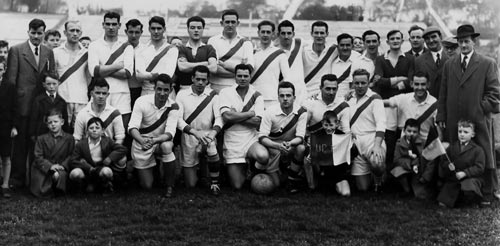
The 1964 Laois Senior Football Championship victory is widely regarded as one of the most important moments in the modern history of Portlaoise GAA. When The Town defeated Graiguecullen by a single point in the county final, it ended a remarkable 57-year wait for a senior football title and transformed both the confidence and direction of the club.
For decades beforehand, Portlaoise football had endured periods of frustration despite strong underage work and the efforts of figures across The Rovers, Kilminchy and the revitalised Portlaoise club. The amalgamations of the early 1950s, combined with the rebuilding of the juvenile section after 1949, had slowly strengthened the foundations of Gaelic games within the town. By the early 1960s, that work was finally beginning to bear fruit.
The 1964 side contained players who had developed through the renewed juvenile structures of the 1950s and represented a generation that grew up believing Portlaoise could once again compete seriously for senior honours. The county final victory over Graiguecullen was tense and hard-fought, reflecting the intensity of local rivalry and the weight of expectation surrounding the team.
The scenes after the final reflected more than just the winning of a championship. For many within the town, it felt like the rebirth of Portlaoise football. The success gave the club renewed belief, attracted fresh energy into underage and adult structures and established a platform from which Portlaoise would eventually become the dominant football force in Laois over the following decades.
The breakthrough also helped shape the culture that later defined the club. Players from the 1964 era became important mentors, selectors, administrators and role models for younger generations. Their success inspired many of the footballers who would later win Leinster titles in 1971 and 1976, All-Ireland honours in 1983 and the extraordinary run of county championships that followed in later decades.
Looking back, the 1964 championship stands not simply as a county final victory, but as the moment when modern Portlaoise football truly began.
Three-in-a-row senior football champions
Portlaoise completed a famous three-in-a-row of Laois Senior Football Championships in 1968, confirming the club’s emergence as the dominant football force in the county following the breakthrough success of 1964. The achievement represented the culmination of years of rebuilding, juvenile development and unity within the town after the difficult decades that preceded it.
The three-in-a-row was achieved through county final victories over O’Dempsey’s in 1966, Emo in 1967 and Timahoe in 1968. The 1966 final originally finished level at 0-7 each before Portlaoise won the replay against O’Dempsey’s by 2-8 to 1-4.
In 1967, Portlaoise retained the championship in emphatic fashion, defeating Emo by 4-9 to 1-7, with a powerful attacking display confirming The Town’s growing strength within Laois football.
The historic three-in-a-row was completed in 1968 when Portlaoise defeated Timahoe by 1-10 to 1-5 in the county final. The victory cemented the team’s status as the leading football force in Laois and marked the first sustained period of modern dominance by The Town.
Among the established stars of the period were Paddy Bracken, Alfie Lewis, Paschal Delaney, Jim Hughes, Teddy Fennelly and “Rake” McDonald, players who had become central figures in restoring senior football strength to the town during the 1960s. Their experience and leadership provided the backbone for a younger generation beginning to emerge within the club.
The team of the late 1960s carried enormous significance for Portlaoise. It marked the first sustained period of modern dominance by The Town and proved that the club’s revival after the amalgamations and juvenile rebuilding of the 1950s had fully matured into senior success.
The three-in-a-row also laid the foundations for the even greater success that followed in the 1970s and 1980s. Many of the standards, attitudes and expectations developed during this period became embedded within the club and helped shape the Leinster-winning teams of 1971 and 1976 and ultimately the All-Ireland club champions of 1983.
The first modern Leinster club title
Portlaoise captured its first modern Leinster Senior Club Football Championship during the 1971/72 campaign, marking one of the great breakthroughs in the history of the club. The victory elevated The Town from county champions to provincial champions and established Portlaoise as one of the leading football clubs in Leinster.
The campaign is remembered above all for the extraordinary Leinster final comeback against Athlone. With only twenty minutes remaining, Portlaoise trailed by eleven points and appeared beaten. Yet what followed became one of the defining passages in the club’s football history. Driven by determination, fitness and belief, The Town produced a remarkable rally to overturn the deficit and secure a dramatic victory that entered club folklore almost immediately. Final score: Portlaoise 2-11 v 2-09 Athlone.
The win carried enormous significance for Portlaoise and for Laois football generally. Until then, few clubs from the county had made a major impact on the provincial stage. Portlaoise’s success proved that a Laois club could compete with and defeat the strongest teams in Leinster, helping raise standards and expectations both within the club and across the county.
The team itself reflected the growing maturity of the Portlaoise football revival that had begun in the 1950s and accelerated after the county championship breakthrough of 1964. Many of the players had come through the strengthened juvenile structures developed after the amalgamations with Kilminchy and The Rovers and carried a deep sense of pride in representing a united Portlaoise club.
Support for the team grew enormously throughout the campaign. Huge crowds followed Portlaoise around Leinster, while celebrations after the final became one of the great sporting occasions in the history of the town. The victory also strengthened the bond between the club and the wider community, with the success seen as belonging not just to a team, but to the town itself.
Portlaoise later faced Bellaghy of Derry in the All-Ireland semi-final. Despite a hugely spirited performance, The Town lost narrowly by a single point. Although disappointed to fall just short of an All-Ireland final, the campaign transformed the status of the club nationally and laid the foundations for the even greater achievements that followed in later decades, including the All-Ireland club title of 1983.
Looking back, the 1971/72 Leinster triumph stands as one of the moments that truly changed the trajectory of Portlaoise GAA. It gave the club a new level of confidence and belief and confirmed that The Town belonged among the elite clubs in Ireland.
A second Leinster crown for The Town
Portlaoise returned to the summit of Leinster club football in 1976, capturing a second provincial title and confirming that the success of the early 1970s had not been a once-off achievement. The victory further established The Town as one of the leading club football powers in Leinster.
The Leinster final was played in Croke Park, a major occasion for the club and supporters who travelled in huge numbers to Dublin. Portlaoise produced an outstanding performance to defeat Cooley Kickhams of Louth by 1-12 to 0-08, securing the provincial title in style on Gaelic games’ biggest stage.
The triumph came during an era when the club was building remarkable consistency at senior level. Following the breakthrough county title of 1964 and the famous Leinster success of 1971/72, Portlaoise had developed a strong winning culture built around disciplined training and a fierce sense of pride in representing the town.
The 1976 team combined hardened championship experience with the next wave of emerging Portlaoise footballers who had grown up inspired by the successes of the previous decade.
The Town’s run eventually came to an end in the All-Ireland semi-final, where Portlaoise were defeated by Austin Stacks of Kerry in O’Moore Park. Although disappointed to fall short of an All-Ireland final appearance, the campaign further elevated the status of the club nationally and helped strengthen the belief that Portlaoise could compete with the strongest clubs in Ireland.
Looking back, the 1976 Leinster title confirmed that Portlaoise had moved beyond breakthrough status and become one of the great club football teams of its generation. The Town had firmly established itself among the elite clubs in Leinster football and laid more foundations for the historic All-Ireland success that would follow in 1983.
Portlaoise plans for the future
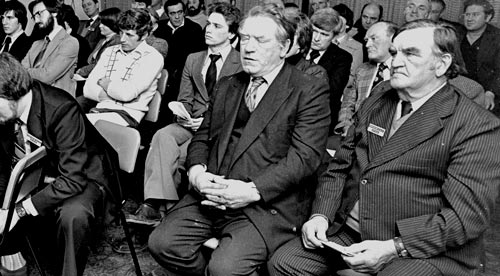
In March 1978, Portlaoise GAA unveiled one of the most ambitious development plans in the history of the club during a major press conference held at the Killeshin Hotel. The event marked the beginning of a transformative era for The Town as plans were officially launched for new club facilities and long-term development that would help shape the future of Portlaoise GAA for generations to come.
The launch was attended by some of the most influential figures in the Association, including GAA President Con Murphy, Leinster Council chairman Paddy Buggy and Laois County Board chairman Sean Ramsbottom. Club chairman Teddy Fennelly outlined the ambitious vision for the project and detailed plans for facilities that would cost in excess of £50,000, a huge figure at the time.
Fennelly explained that while Portlaoise would continue to place enormous emphasis on nurturing football and hurling, the club now also intended to provide first-class facilities worthy of the growing town and its expanding membership. He stressed that much of the work would be completed through voluntary effort, reflecting the deep community spirit that had always underpinned the club since its foundation in 1887.
GAA President Con Murphy strongly endorsed the plans and praised the ambition being shown by the club. He described the development as hugely important not only for Portlaoise GAA but for the wider community. Murphy noted that a town the size of Portlaoise needed modern sporting facilities and highlighted the importance of clubs having their own grounds and amenities to ensure long-term success.
Murphy also praised the close involvement of local schools, particularly the CBS, and spoke warmly about the role of women within the Association. He emphasised that women were making invaluable contributions through fundraising, catering and club organisation and appealed to the wider business community in Portlaoise to support the ambitious project.
Leinster Council chairman Paddy Buggy said he was deeply impressed by both the scale of the proposals and the professional manner in which the campaign was being presented, while County Board chairman Sean Ramsbottom reminded those present of the visionary work carried out years earlier by Fr John Kearney in securing O’Moore Park for the county. “Portlaoise, it could be said, was coming home,” Ramsbottom remarked.
The development plans received extensive coverage in the Leinster Express under the headline “Portlaoise GAA to invest £50,000 in new facilities”. The newspaper detailed the club’s ambitious fundraising programme, which included sponsored walks, dances, field days, cabarets, festivals of dancing, juvenile fundraising drives, a continuing 500 Club and even “Armchair Horse Racing”.
One of the standout fundraising occasions during the year was a major tournament game between Laois and Kerry held in June 1978. Kerry, featuring stars such as Pat Spillane, Charlie Nelligan, Jimmy Deenihan and Tim Kennelly, defeated Laois by 2-8 to 0-9 in a game that attracted huge local interest and helped raise valuable funds for the development project.
The great four-in-a-row of the Portlaoise hurlers
The early 1980s marked one of the greatest periods in the history of Portlaoise hurling as The Town captured four consecutive Laois Senior Hurling Championships between 1981 and 1984. The achievement restored Portlaoise to the summit of county hurling and established the team as one of the finest hurling sides produced in Laois during the modern era.
Remarkably, all four championship victories were captained by John Joe Ging, making him one of the most important and influential figures in the club’s hurling history. His leadership, consistency and determination became symbolic of the team throughout the four-in-a-row campaign.
The run began in 1981 when Portlaoise defeated Camross by 2-13 to 4-5 to claim the club’s first senior hurling title since 1943. The victory ended a 38-year wait for senior championship success and sparked a major revival in hurling within the club.
Portlaoise successfully defended the title in 1982 with a 2-12 to 1-8 victory over Errill.
The third title arrived in 1983 when Portlaoise overcame Camross again by 3-10 to 3-5.
The historic four-in-a-row was completed in 1984 when Portlaoise defeated The Harps by 2-14 to 1-7 in the county final replay. The victory secured the club’s place among the great teams in Laois hurling history and confirmed the extraordinary consistency and standards achieved by the side across the four-year period.
Uniquely, all four finals were played at different venues because O’Moore Park was undergoing redevelopment during this period. The 1984 county final carried additional significance as it became the first final played at the newly renovated O’Moore Park.
The team was guided by Jimmy Doyle and Tom Lalor and featured many of the finest hurlers produced by the club. The era also coincided with a stronger period for Laois hurling generally, highlighted by Pat Critchley becoming the county’s first All-Star in 1985.
Portlaoise conquer Leinster once again
Portlaoise created another landmark in 1982 by reaching a second Leinster Senior Club Football Final within the same calendar year. After the disappointment of defeat to Raheens earlier that year, The Town responded in remarkable fashion, defeating Ballymun Kickhams of Dublin by 1-8 to 0-7 in Carlow to capture a third Leinster title, a provincial record at the time.
Played on a heavy pitch in difficult winter conditions, the game was a tense and fiercely contested affair with scores hard to come by. Portlaoise led narrowly by 0-3 to 0-2 at half-time through points from Tom Prendergast and Liam Scully, though Ballymun had enjoyed the assistance of a strong breeze and many felt the slender lead might not be enough.
The match was ultimately transformed by a whirlwind opening ten minutes to the second half. Joe Keenan produced the defining moment of the final when he latched onto a breaking ball and crashed a thunderous shot to the roof of the net. Energised by the goal, Portlaoise surged clear with further scores from Liam Scully, Pat Critchley, Noel Prendergast and Tom Prendergast to open up a commanding lead.
Ballymun, inspired by Dublin star Barney Rock, fought back strongly in the closing stages, but Portlaoise defended with enormous discipline and resilience. Jimmy Bergin earned particular praise for his handling of Rock, while Mick Mulhall, Mick Lillis and Eamonn Whelan were among the standout performers throughout the field.
Liam Scully lifted the Leinster trophy as captain as Portlaoise secured their third provincial title in the ten-year history of the competition. The victory set up a hugely anticipated All-Ireland semi-final against St Finbarr’s of Cork and became one of the defining victories on the road to the club’s historic All-Ireland success of 1983.
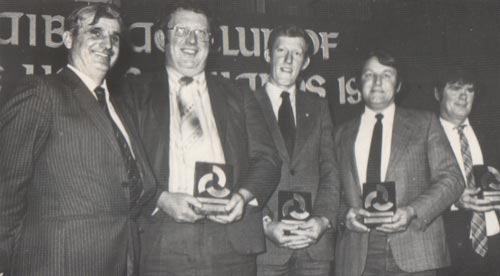
AIB Leinster Club of the Year
In recognition of their outstanding achievements during one of the greatest periods in the club’s history, Portlaoise were selected as the AIB Leinster Club of the Year in 1982. The award acknowledged the club’s remarkable success on the field, culminating in Leinster championship glory and the All-Ireland campaign that would ultimately lead to national success in 1983.
All-Ireland Club Football Champions
Sunday 20 March 1983 remains the proudest day in the history of Portlaoise GAA Club. On that afternoon in Cloughjordan, Co Tipperary, Portlaoise became the first club from Laois to win the All-Ireland Club Senior Football Championship, defeating Clann na nGael of Roscommon by 0-12 to 2-0 and finally bringing the greatest prize in club football back to the county for the first time ever.
The victory ended years of heartbreak and near misses for Portlaoise teams of the 1970s, finally burying what many had called the “gallant losers” tag. The triumph represented the culmination of decades of work, sacrifice and rebuilding within the club, stretching back through the amalgamations and juvenile revival of the 1950s, the breakthrough county title of 1964 and the Leinster-winning teams of 1971 and 1976.
The final itself was played in difficult and unusual circumstances. The match had originally been fixed for Tullamore, but torrential rain and strong winds forced a late switch on the morning of the game to Cloughjordan. In front of an estimated attendance of around 4,000, Portlaoise produced one of the grittiest and most determined performances ever delivered by a Town team.
Portlaoise started brightly despite difficult conditions. Tom Prendergast opened the scoring after six minutes following a quick free from Eamonn Whelan and quickly added another score from the kick-out. Gerry Browne and Tom Prendergast continued to drive Portlaoise forward as The Town established early control, though nervousness in front of goal and a series of wides prevented the Laois champions from fully capitalising on their dominance.
Disaster struck in the 26th minute when Owen McManus managed to divert the ball past Mick Mulhall for a Clann na nGael goal. Despite having played with the assistance of a strong wind, Portlaoise went into the interval holding only a narrow 0-5 to 1-0 lead after shooting thirteen wides in the opening half.
Yet adversity had long become one of the defining traits of this great Portlaoise side. Facing into the fresh breeze after half-time, The Town responded magnificently. Eamonn Whelan steadied matters with an early free before Gerry Browne added another point to push Portlaoise further ahead.
Clann na nGael briefly threatened a comeback when Tony McManus converted a controversial penalty, but Portlaoise refused to yield. Gerry Browne, Liam Scully and Tom Prendergast all added vital scores during the final quarter as The Town reasserted control and closed out a historic six-point victory.
Though Portlaoise finished with twenty wides, there was never any doubt about the superiority of their overall play. The defence was outstanding throughout, while the midfield pairing of Eamonn Whelan and Mick Dooley dominated possession during crucial periods of the game. Mick Mulhall gave another assured display in goals, while Tom Prendergast top scored with four points. Gerry Browne added three points, while Liam Scully and Eamonn Whelan each contributed two.
The full Portlaoise team that etched its name forever into GAA history was: Mick Mulhall; John Bohane, Jimmy Bergin, Mark Kavanagh; Colm Browne, Mick Lillis, Bernie Conroy; Eamonn Whelan, Mick Dooley; Noel Prendergast, Pat Critchley, Tom Prendergast; Liam Scully, Joe Keenan and Gerry Browne.
When the final whistle sounded, scenes of enormous celebration broke out among the Portlaoise supporters who had travelled to Tipperary. The victory gave Laois football its first ever All-Ireland senior football title and secured the immortality of one of the greatest teams ever to wear the green and white.
The significance of the achievement stretched far beyond Portlaoise itself. The success inspired footballers across Laois and proved that a club from the county could rise to the summit of Gaelic football in Ireland. A civic reception was later held at County Hall where County Manager Michael Deegan described the team as “a splendid example to the youth of Portlaoise.”
The official opening of Fr Browne Avenue
Monday 1 August 1983 marked one of the great landmark days in the history of Portlaoise GAA Club when the club’s new GAA Centre at Fr Browne Avenue was officially opened. Coming only months after the footballers had captured the All-Ireland Club Championship, the occasion represented another enormous milestone in what was already the most successful period the club had ever experienced.
The official opening ceremony was performed by GAA President Paddy Buggy alongside Portlaoise GAA Life President Fr Matt Walsh, one of the most influential figures in the history of the club. Their presence reflected both the importance of the development and the deep connection between the club’s proud past and its ambitious future.
A huge gathering attended the historic occasion including Leinster Council President John Dowling, Very Rev Gregory Brophy PP, Rev Kingston, Rev Fr Tom Coonan, Br J.B. Howard of Portlaoise CBS, Oliver J Flanagan TD, Tom Colgan of Portlaoise Town Commission, Laois GAA President Tom Cushen, County Board chairman Sean Ramsbottom, past and present club officers and hundreds of club members and supporters.
The opening day itself became a major celebration of Portlaoise GAA. A full programme of games was organised throughout the day to showcase both the new facilities and the strength of the club on the field. The senior hurlers defeated Cashel while the footballers overcame old rivals Walsh Island in front of large crowds. A social evening later concluded what many regarded as one of the proudest days ever experienced by the club.
Speaking during the ceremony, GAA President Paddy Buggy paid glowing tribute to Portlaoise and declared that The Town “must be the greatest club in Ireland.” He praised the organisation and ambition of the club in both football and hurling and congratulated Portlaoise on its extraordinary achievements, including the recent All-Ireland Club title, Féile na nÓg success and multiple county championship victories.
The opening of Fr Browne Avenue was the culmination of years of fundraising, volunteer effort and long-term planning that had begun in the late 1970s. Huge amounts of voluntary labour were invested into developing the grounds and facilities, reflecting the extraordinary commitment of Portlaoise members and supporters during the era.
The new grounds quickly became the spiritual home of Portlaoise GAA and would serve generations of players, coaches and supporters in the decades that followed. For many members, the development symbolised the growth of Portlaoise from a successful county club into one of the leading club organisations in Ireland.
The legendary “Double Double”
Portlaoise GAA achieved one of the greatest and rarest accomplishments in the history of Laois sport, the famous “Double Double”. In a truly extraordinary year for The Town, Portlaoise captured senior and minor county championships in both football and hurling, completing a feat that remains one of the crown jewels in the history of the club.
The achievement reflected the remarkable strength of Portlaoise GAA at every level during the era. While the senior teams continued the success that had brought Leinster and All-Ireland glory in the early 1980s, the club’s juvenile structures were simultaneously producing another generation of exceptional talent ready to carry The Town forward into the future.
The senior hurlers completed a historic four-in-a-row of Laois Senior Hurling Championships in dramatic fashion. Facing the newly formed Harps club in the county final, Portlaoise were fortunate to escape the drawn game with a replay after a major scare. However, given a second chance, The Town responded in emphatic style.
In the replay, Portlaoise raced from the blocks and had seven points on the board before The Harps managed a reply. With Mathew Keegan scoring 1-2, Billy Bohane contributing 0-5 and Mickey Bohane adding 1-1, Portlaoise powered to a convincing 2-14 to 1-7 victory. The triumph secured the club’s sixth senior hurling title and fourth in succession.
One week later, the senior footballers added another chapter to the remarkable season. Portlaoise entered the county final against Ballyroan as reigning All-Ireland champions and favourites to claim a record 15th Laois Senior Football Championship. Yet, much like the hurling final, the first encounter ended in a draw as Ballyroan, led by players such as Liam Irwin, Mick Drennan, Pat Dunne, Pat McWey, Jim Whelan and county goalkeeper Martin Conroy, pushed The Town all the way.
The drawn game finished 0-9 to 1-6 after Portlaoise fought back strongly in the closing stages to rescue the replay. But once again, The Town seized their second opportunity with ruthless efficiency. In the replay, Portlaoise dominated from start to finish and Ballyroan had to wait until the second minute of the second half to register their first score. The final score of 2-8 to 0-4 scarcely reflected the extent of Portlaoise’s superiority as they secured a record-breaking 15th senior football championship title.
At juvenile level, the club’s future stars mirrored the achievements of their senior counterparts. The minor hurlers captured their first county title since 1980 with an impressive 2-10 to 1-5 victory over Borris-in-Ossory. Paul Bergin produced one of the great individual performances in a minor final, accounting for all but two of the Portlaoise tally and firmly establishing himself as one of the brightest young talents in the county.
The minor footballers also required a replay to complete the clean sweep. Graiguecullen were chasing their first minor football title since 1949 and looked set for victory in the drawn game before a dramatic late intervention from Paul Bergin rescued Portlaoise. One week after his brother Liam had helped save the senior hurlers, Bergin struck a crucial last-minute goal after good work from Pat Dalton to leave the game level at 3-6 apiece.
In the replay, Portlaoise raised their performance significantly. James Fahy led the scoring with five points while a Paul Bergin goal and further scores from Liam Duggan, Ronan O’Connell and Tom Fitzpatrick secured a convincing 1-8 to 1-2 victory and brought the Corcoran Cup back to the county town.
Incredibly, replays were required in the senior hurling, senior football and minor football finals before the “Double Double” was finally completed, making the achievement all the more dramatic and memorable.
The legacy of 1984 still resonates deeply within Portlaoise GAA today. The achievements of that extraordinary season established a standard of excellence that inspired generations of players, mentors and supporters. The men and boys who wore the green and white during that unforgettable year ensured that Portlaoise stood proudly at the summit of both football and hurling in Laois, a feat unmatched before or since.
A fourth Leinster football crown
Portlaoise captured a record fourth Leinster Senior Club Football Championship in 1985, further cementing the club’s place among the elite football teams in Ireland during one of the greatest eras in the history of The Town. Just two years after lifting the All-Ireland Club title, Portlaoise again powered through Leinster with a blend of experience, skill and championship resilience that had become synonymous with the green and white.
The campaign began with an impressive 3-10 to 1-6 victory over Wexford champions Duffry Rovers. Noel Prendergast led the scoring with 1-6 while Tom Prendergast and Liam Scully also found the net as Portlaoise quickly established themselves as serious contenders for provincial honours.
Next came a gripping semi-final encounter against Navan O’Mahoneys of Meath at O’Moore Park. In one of the most demanding games of the campaign, Portlaoise had to draw on all their championship experience and composure before eventually emerging victorious by 2-10 to 1-10. Liam Scully and George Phelan struck crucial goals while Noel and Tom Prendergast, along with Eamonn Whelan, played leading roles in another hard-earned victory.
The Town then defeated Kildare champions Carbury by 1-11 to 2-3 in the provincial final stages. Portlaoise dominated much of the contest and had effectively wrapped up the game by half-time when they led by 1-5 to 0-1. Liam Scully’s goal, combined with excellent scoring from Joe Keenan, Noel Prendergast, Tom Prendergast and Eamonn Whelan, secured another convincing provincial win.
The Leinster final itself against Baltinglass in Athy became one of the great club finals of the era. Played before an estimated crowd of 4,000, the first encounter ended level at 1-8 apiece after a dramatic battle. Portlaoise led by 1-4 to 0-4 at half-time but Baltinglass mounted a powerful comeback inspired by Kevin O’Brien and Robert McHugh. The Town looked to be heading for defeat until Noel Prendergast struck a vital equaliser five minutes from time to force a replay.
Tom Prendergast delivered a magnificent performance in the drawn game and was widely regarded as the outstanding player on the field. Alongside him, Portlaoise lined out with a team packed with club legends including Mick Mulhall, Jimmy Bergin, Colm Browne, Bernie Conroy, Joe Keenan, Gerry Browne, Liam Scully, Pat Critchley and Eamonn Whelan.
If the drawn game had been dramatic, the replay one week later was even more memorable. An estimated crowd of 5,500 packed into Athy ten days before Christmas for what became a classic Leinster final replay. Portlaoise, who had developed a formidable reputation in replay situations, once again showed remarkable composure and championship nerve to defeat Baltinglass by 2-8 to 1-9.
Tom Prendergast again proved inspirational, scoring 1-3 in a dazzling display of skill and creativity. Pat Critchley added a goal while Eamonn Whelan, Seamus Lawlor and Liam Scully also contributed important scores. Portlaoise built up a six-point lead early in the second half and although Baltinglass launched another fierce comeback, The Town held firm to secure the title.
The triumph delivered Portlaoise a then record fourth Leinster Senior Club Football Championship and reinforced the club’s reputation as one of the dominant forces in provincial football during the 1970s and 1980s. The 1985 campaign also showcased the remarkable consistency of a generation of players who continued to carry the standards established by the All-Ireland winning side of 1983.
The formation of the Ladies Football club
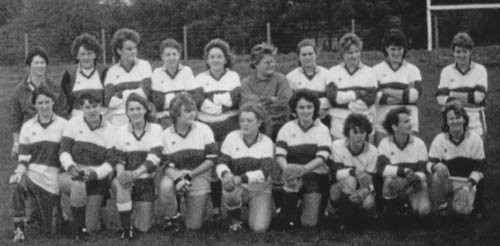
Another hugely important chapter in the history of Portlaoise GAA began in 1985 with the formation of the ladies football section of the club. What started from a single meeting and the enthusiasm of a small group of players and volunteers would grow into one of the most successful and influential strands of the modern club.
Interest in ladies football in Portlaoise developed rapidly from the outset. Approximately fifty girls joined during the first year alone, a remarkable response that reflected the growing appetite for Gaelic games among young women in the town. Such was the early enthusiasm that Portlaoise entered two teams into championship competition almost immediately.
Among the key founding figures was Tom Daly, whose work and commitment played an important role in helping establish the club during its formative years. The foundations laid by Daly and the early organisers created structures that would allow ladies football to flourish in Portlaoise in the decades that followed.
The establishment of the ladies section in 1985 marked a hugely significant expansion of Portlaoise GAA and reflected the evolving role of Gaelic games within the community. What began with approximately fifty girls and a handful of volunteers would eventually grow into one of the strongest ladies football structures in Laois and Leinster.
Pat Critchley - Hurling All-Star
In 1985, Pat Critchley became the first and to date only player from Laois to win a senior hurling All-Star when he was selected at centrefield following a series of outstanding performances for Laois. The award represented a landmark moment not only for Critchley personally, but also for Portlaoise and Laois hurling, recognising one of the finest players ever produced by the club during a golden era for The Town.
A second football three-in-a-row
Portlaoise secured a historic second senior football three-in-a-row in 1986 when they defeated Emo by 2-9 to 1-7 in the Laois Senior Football Championship final. The victory delivered a seventeenth county title to The Town, their fifth championship success of the 1980s and their second sequence of three consecutive titles following the famous 1966, 1967 and 1968 triumphs.
The championship win further confirmed Portlaoise as the dominant football force in Laois during the era. Though reigning Leinster champions and All-Ireland winners only a few seasons earlier, The Town found themselves in a tense and rugged encounter against a determined Emo side who refused to yield throughout the hour.
The game itself never fully developed into a classic and the Leinster Express later remarked that the eventual five-point winning margin was somewhat flattering to Portlaoise. Billy Bohane’s late goal ultimately sealed the issue, but for long periods the contest remained finely balanced with Emo pushing the champions all the way.
Portlaoise and Emo were level at half-time after a fiercely contested opening period. Noel Prendergast missed a penalty in the first half, helping to keep Emo’s confidence alive, while Ger Lawlor delivered an inspirational display for the challengers and continually caused problems for the Portlaoise defence.
The Town appeared to take control during the third quarter when they opened up a six-point advantage through scores from Billy Bohane, Tom Prendergast and Eamonn Whelan. Yet Emo refused to disappear and a stirring comeback, inspired largely by Gerry Lawlor, cut the gap back to two points entering the closing stages and created a tense finish for the large attendance.
Ultimately, Portlaoise’s greater experience and attacking strength proved decisive. Billy Bohane struck the crucial late goal that finally settled the contest and ensured the title remained in the county town.
One of the defining performances of the final came from Eamonn Whelan, whose inspirational display at midfield played a major role in the victory. Whelan’s ninth senior championship medal highlighted both his extraordinary consistency and his importance to one of the greatest eras in Portlaoise football history.
Billy Bohane finished as Portlaoise’s leading scorer with 2-1, while Noel and Tom Prendergast contributed two points each. Joe Keenan, Eamonn Whelan, Gerry Browne and Seamus Lalor also added scores in another hard-earned county final triumph.
The Portlaoise team on the day was: Mick Mulhall, Brian Colgan, Bernie Conroy, Tommy Conroy, Liam Duggan, Colm Browne, John Taylor, Joe Keenan, Pat Critchley, Billy Bohane, Tom Prendergast, Gerry Browne (captain), Seamus Lalor, Eamonn Whelan and Noel Prendergast. Mark Kavanagh appeared as substitute.
The 1986 county championship triumph helped ease some of the disappointment that still lingered following the heavy All-Ireland semi-final defeat to The Burren earlier that year. After such a painful end to their national campaign, Portlaoise responded in the best possible fashion by reclaiming domestic honours and securing another historic three-in-a-row in Laois football.
Colm Browne - Football All-Star
In 1986, Colm Browne received one of the highest honours in Gaelic football when he was awarded an All-Star at left half-back. The award recognised Browne’s outstanding performances for Laois and further highlighted the remarkable contribution of Portlaoise players during one of the greatest eras in the history of the club. Widely respected for his leadership, reading of the game and inspirational defending, Browne was a central figure in both Portlaoise and Laois footballers.
Heartbreak in the Leinster hurling final
The 1987 Leinster Club Senior Hurling Championship campaign remains one of the proudest and most heartbreaking chapters in the history of Portlaoise GAA. In the club’s centenary year, The Town produced a remarkable provincial run, defeating Kiltegan of Wicklow, Kilkenny champions Glenmore and Offaly champions St Rynagh’s to reach a first ever Leinster club hurling final.
The victories over Glenmore and St Rynagh’s were regarded as major milestones for both Portlaoise and Laois hurling. Billy Bohane starred against Glenmore with 0-10 while Portlaoise overwhelmed St Rynagh’s in the second half of the semi-final to win 1-12 to 0-7 at O’Moore Park.
Waiting in the final were Wexford champions Rathnure, a side packed with county stars including Martin Quigley, Jimmy Houlihan and John Conran. Yet Portlaoise showed no fear and led for almost the entire contest in one of the great Leinster club finals.
Billy Bohane’s early goal helped Portlaoise into a 1-4 to 0-5 half-time lead, while magnificent displays from John Taylor, Cyril Duggan and Des Rigney drove The Town forward during a superb second-half performance. Paul Bergin, Pat Critchley and Liam Bergin also excelled as Portlaoise looked set for a famous victory.
With time almost up, Portlaoise still led by two points. However, in devastating fashion, Rathnure struck for a late injury-time goal through Nicky Hearne to snatch a dramatic 3-8 to 1-13 victory and deny The Town a first Leinster title.
Despite the heartbreak, the performance earned enormous admiration across the province. The Leinster Express described the game as “a triumph for Portlaoise and Laois hurling” and the 1987 team remains widely regarded as one of the greatest hurling sides ever produced by the club.
A fifth Leinster football title
Only weeks after the heartbreak of the Leinster hurling final defeat to Rathnure, Portlaoise responded in magnificent fashion by capturing a fifth Leinster Senior Club Football Championship in 1987. The victory moved The Town two clear of every other club on the provincial roll of honour and further cemented Portlaoise’s status as one of the great football teams of the era.
The campaign itself had already featured drama from the opening round. Against Meath champions Summerhill, inspired by All-Ireland winning captain Mick Lyons, Portlaoise fought back to earn a 0-12 each draw thanks to a series of late James Fahy frees. The replay proved far more comfortable as The Town powered to a 1-15 to 1-4 victory with Fahy again starring.
In the semi-final at Carlow, Portlaoise defeated Athy of Kildare by 2-5 to 0-2, with James Fahy and Pat Critchley scoring first-half goals in another composed display.
The Leinster final against Parnells proved another epic battle. The drawn game ended level at 1-8 each before Portlaoise once again demonstrated their remarkable ability to respond in replay situations.
In the replay, Parnells made the stronger start and led by 1-3 to 0-2 at half-time after Brendan Brady blasted a goal to the net. Portlaoise had missed a series of chances but, as so often with this great team, their composure and championship mentality eventually shone through.
Tom Prendergast began the comeback with a brilliant second half display while Seamus Lalor palmed home a vital goal in the 42nd minute after another dangerous Prendergast run. Gerry Browne and Noel Prendergast then struck crucial late points to push Portlaoise ahead before Browne’s final clearance confirmed a dramatic 1-7 to 1-5 victory.
For players such as John and Billy Bohane, Pat Critchley and John Taylor, the victory carried extra emotion after the cruel Leinster hurling final defeat only weeks earlier. The football triumph helped banish some of those painful memories and once again highlighted the resilience that had become synonymous with Portlaoise teams of the era.
Outstanding performances came from across the field. John Bohane produced one of his finest ever football displays, Gerry Browne delivered an inspirational performance, while Billy Bohane’s accurate long passing and Tom Prendergast’s brilliance continually troubled the Parnells defence. Mick Mulhall also made history by winning his fifth Leinster medal in his tenth provincial final appearance.
The victory ensured that 1987 would be remembered as one of the most extraordinary years in the history of the club, with Portlaoise contesting both the Leinster football and hurling finals during the centenary year of the club’s foundation.
The first ladies adult title
Sunday 2 October 1988 marked a historic milestone in the story of Portlaoise Ladies Football when The Town captured the first ever adult ladies silverware in the club’s history. Portlaoise defeated Mountrath by 1-09 to 1-00 in the Laois Ladies Junior Football Final to secure a famous breakthrough victory only three years after the formation of the ladies section of the club.
Captained by Cora Graham, Portlaoise produced an outstanding display against a spirited Mountrath side and controlled much of the contest on their way to a deserved county final success. The victory represented a hugely significant moment for the players, mentors and volunteers who had worked tirelessly to establish ladies football within the club during its early years.
Croke Park final appearance
Portlaoise defeats Crossmaglen in the All-Ireland semi-final before narrowly losing to Ballina Stephenites in the St Patrick’s Day club final.
Seventh Leinster title
The Town wins another Leinster senior club football title, confirming its place at the head of the provincial roll of honour.
Rathleague era begins
The club completes the move to Rathleague, opening a new chapter for a growing urban club with expanding adult and juvenile structures.
Senior football titles continue
Portlaoise adds three more Laois senior football championships, defeating Ballylinan in 2017, O’Dempsey’s in 2018 and Killeshin in 2019.
Ladies senior breakthrough
The Portlaoise ladies footballers win their first Laois Senior A Football Championship, defeating Sarsfields and ending their run at the top of the county game.
Adult camogie honours
Portlaoise camogie claims Junior A championship success, marking a major step in the development of the camogie section.
Senior ladies titles added
Portlaoise ladies football adds further Laois Senior A titles, defeating St Conleth’s in both finals.
Camogie title returns
Portlaoise wins the Laois Junior A Camogie Championship again, beating Camross in the final.
Rathleague redevelopment
The club enters another landmark development phase, with an all-weather pitch, car park, new clubhouse, indoor training facility, stand, landscaping and pitch enhancements planned across the project.
Roll of Honour
A club with a national footprint
Football
County dominance, Leinster stature and All-Ireland glory
Men’s football has been central to the Portlaoise story from the first years of the GAA. The 1889 Leinster title showed the club’s early strength, but the modern football era truly turned in 1964 when the senior footballers ended a 57-year wait by beating Graiguecullen by a single point.
From there, Portlaoise became the dominant force in Laois football. The club built teams that combined local pride, underage development and a fierce championship culture. The 1971/72 Leinster campaign, with its famous comeback against Athlone, announced The Town on the modern provincial stage.
The high point came in 1983 when Portlaoise became All-Ireland Club Football Champions. The team defeated St Finbarr’s of Cork in the semi-final before beating Clann na nGael of Roscommon in the final. Later generations continued that tradition, including the 2004 Leinster-winning side that reached the 2005 All-Ireland final and the 2007 to 2015 team that completed nine Laois titles in a row.
- All-Ireland Club Football Champions, 1983
- Leinster Club Football Champions seven times
- Laois Senior Football Champions 35 times
Hurling
The hurling tradition
Portlaoise hurling has its own proud and sometimes turbulent history. The club won senior titles in 1928 and 1943 but also endured periods when disputes, decisions and local circumstances weakened momentum. The Rovers, Kilminchy and De Montforts helped keep games alive in the town during quieter periods.
The 1980s became the great Portlaoise hurling decade. The senior hurlers captured six county titles, including the four-in-a-row from 1981 to 1984. John Joe Ging captained each of those four winning teams, while Jimmy Doyle and Tom Lalor guided a side that also carried Portlaoise into Leinster club hurling finals.
That era coincided with a stronger period for Laois hurling generally, with Portlaoise players central to county teams and Pat Critchley becoming the first and only Laois hurler to receive an All-Star in 1985.
- Laois Senior Hurling Champions 11 times
- Four-in-a-row senior hurling titles, 1981 to 1984
- Leinster club hurling final appearances in 1987 and 1998
“The history of Portlaoise GAA is the story of a town carrying its club from one generation to the next.”
One Club
Football, hurling, ladies football and camogie
The modern Portlaoise GAA story is broader than one team or one code. It is the story of boys and girls, men and women, footballers, hurlers, camogie players, coaches, mentors, families and volunteers all carrying the same identity.
From revival to senior titles
The ladies football club was first formed in 1985 and won its first title in 1988. It later re-emerged as a juvenile club around 2000, built steadily through the underage grades, returned to senior level and reached Senior A finals in 2016, 2017 and 2018 before making the breakthrough in 2020. Further senior titles followed in 2022, 2023 and 2025.
A modern section with momentum
Portlaoise began running camogie in 2007. Progress came through underage teams, coaching structures and growing numbers. The club reached adult championship level in 2019, won Junior A honours in 2020 and added another two Junior A titles in 2021 and 2024 after final victories over Camross.
The supply line
Underage development has been central to the club since the 1949 revival. Portlaoise has won across juvenile football and hurling and has enjoyed national Féile success. The strength of the juvenile section has fed adult teams, county squads and the broader club culture for decades.
County influence
The Portlaoise supply line
Portlaoise players, coaches and administrators have shaped Laois GAA across generations. The club has supplied county captains, All-Stars, Railway Cup players, International Rules representatives, Ireland shinty players and officers whose influence reached well beyond the club.
All-Stars
National recognition
Pat Critchley became the first Laois hurler to receive an All-Star when selected at midfield in 1985. Colm Browne received a football All-Star in 1986, the same year he captained Laois to National Football League success. Ciamh Dollard added to the club’s All-Star roll when selected as goalkeeper on the 2014 TG4 Ladies Football All-Star team.
2016 onwards
A new era of growth
Since the publication of the club history book, Portlaoise GAA has continued to evolve. The men’s footballers added more senior championships, the ladies footballers made a historic senior breakthrough, camogie won adult titles and Rathleague moved towards another major development phase.
Senior football titles added
Portlaoise returned to the top of Laois senior football in 2017, beating Ballylinan 3-13 to 0-10. The Town followed up with a 2-16 to 1-13 win over O’Dempsey’s in 2018 and a narrow 0-14 to 2-7 victory over Killeshin in 2019.
Senior ladies success
After final defeats in 2016, 2017 and 2018, Portlaoise won the Laois Ladies Senior A Football Championship in 2020, defeating Sarsfields 1-12 to 0-12. The team added further senior titles in 2022 and 2023, both against St Conleth’s.
Camogie silverware
The camogie section continued its adult development, winning the Laois Junior A Championship in 2021 and again in 2024, when Portlaoise defeated Camross 1-15 to 2-05.
Club grounds
The places that shaped the club
A club’s history is also told through its grounds. For Portlaoise, that story moves from early town fields to O’Moore Park, from Father Browne Avenue to Rathleague and now into the next phase of development.
Father Browne Avenue
After decades without permanent club grounds of its own, Portlaoise GAA took a major step forward during the 1970s with the development of facilities at Fr Browne Avenue. The ambitious project represented a transformative moment in the history of the club and reflected the growing strength, organisation and vision of Portlaoise GAA during one of the most successful eras in its history.
The development was achieved through enormous voluntary effort, fundraising and community support. Club members and supporters dedicated countless hours to building facilities that would provide Portlaoise teams with a permanent home and create a centre for Gaelic games in the town. The club centre itself was named in honour of Paschal Delaney, while the playing grounds commemorated the legendary Bill Phelan, one of the most influential figures in Portlaoise GAA history when they were named Páirc Uí Fhaoláin. The committee room was dedicated to Jimmy Cotter, recognising his immense contribution to the administration and development of the club.
Officially opened in 1983 during a golden period for Portlaoise GAA, Fr Browne Avenue quickly became much more than simply a sports ground. For generations of players, supporters and families, it became the heart of club life and one of the defining landmarks in the sporting and social life of the town.
Countless matches, training sessions, county finals, celebrations, meetings, fundraisers and volunteer projects took place at Fr Browne Avenue over the following decades. The grounds became synonymous with the great Portlaoise teams of the 1980s and 1990s and provided the setting for many of the club’s most treasured memories both on and off the field.
Rathleague
As Portlaoise continued to grow, the facilities at Fr Browne Avenue eventually became too limited for the scale and demands of the club. With playing numbers increasing rapidly across football, hurling, ladies football and camogie, plans were developed for a new long-term home capable of serving future generations of players and members.
Following years of planning, negotiation, fundraising and considerable challenges behind the scenes, the move to Rathleague was finally approved. The development of the new grounds was completed in 2011 and marked one of the most significant off-field achievements in the modern history of Portlaoise GAA. Rathleague provided the club with expanded playing facilities, modern infrastructure and the space needed to support one of the largest GAA clubs in the country.
The successful move to Rathleague reflected the resilience, ambition and volunteer spirit that has defined Portlaoise GAA since its foundation in 1887. Generations of club members, officers, supporters and volunteers played important roles in bringing the project to fruition during what was often a long and difficult process.
Rathleague itself continues to evolve. Major redevelopment works are currently ongoing at the club grounds, including significant upgrades to facilities and infrastructure designed to meet the needs of future generations. It is hoped that the current phase of redevelopment will be completed in 2027, representing another major milestone in the continuing growth and development of Portlaoise GAA Club.
Built by generations. Carried by volunteers. Ready for the future.
From the Town Hall in 1887 to Rathleague today, Portlaoise GAA Club has always been built by people who believed in something bigger than themselves. Some wore the jersey, some coached, some washed jerseys, some chaired meetings, some cut grass, some sold tickets, some raised funds and some simply stood on the sideline year after year.
The next phase at Rathleague continues that story. With plans for an all-weather pitch, new car park, clubhouse, indoor training facility, viewing stand and further pitch improvements, the club is preparing for future generations while staying rooted in the values that carried it from the beginning.
The history of Portlaoise GAA is not finished. It is still being written every week by players, coaches, families, supporters and volunteers across every section of the club.